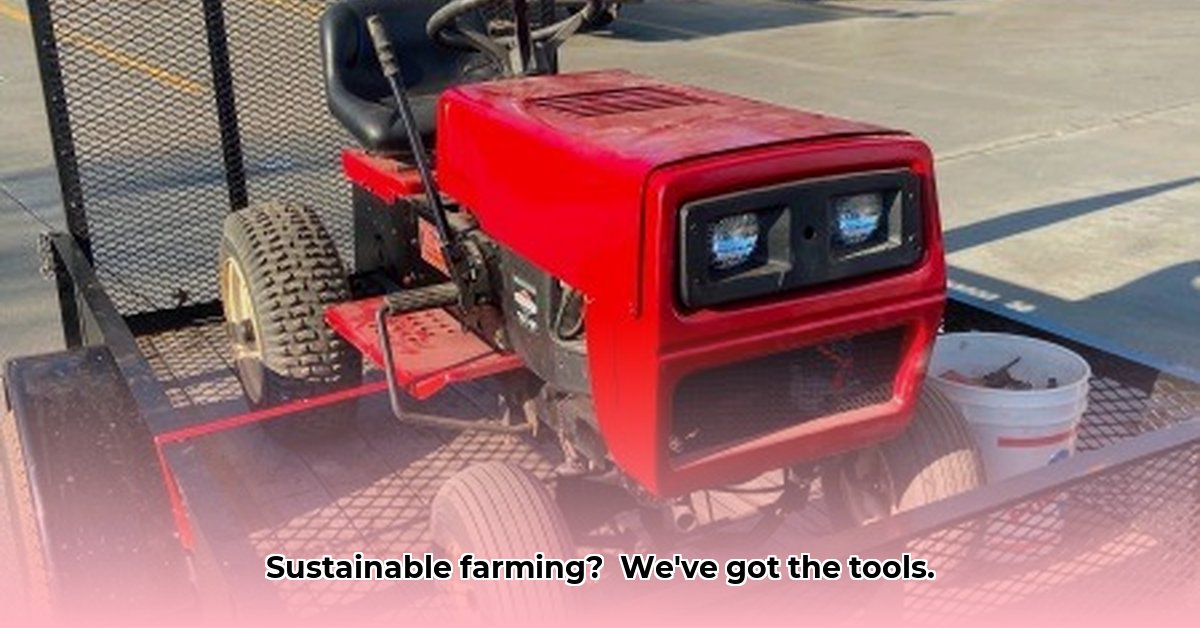
Understanding Sustainable Agriculture in South Daytona
Finding the right equipment is crucial for any farm, and the pursuit of sustainable agriculture in South Daytona presents unique challenges and opportunities. This guide helps navigate the local landscape, focusing on eco-friendly options and providing actionable steps for farmers, suppliers, and policymakers. A key challenge, however, is the limited readily available information concerning the specific sustainable agriculture equipment available in South Daytona. For more information on local suppliers, check out South Daytona Tractor & Mower.
The Current Landscape: Data Gaps and Opportunities
South Daytona boasts agricultural equipment suppliers like South Daytona Tractor & Mower and Ag-Pro, suggesting a market exists. However, a significant gap hinders a comprehensive understanding of the region's sustainable farming equipment needs. What specific sustainable technologies are in demand? Are electric tractors viable? What about water-efficient irrigation systems or precision farming tools? This lack of data limits effective support for sustainable agricultural practices. How can we bridge this gap?
What Sustainable Farming Equipment is Needed?
This data deficiency poses a serious obstacle. To support sustainable agriculture effectively, we must determine the actual equipment needs of local farmers. Will electric tractors prove practical? Would water-saving irrigation systems significantly improve resource management? Are high-tech precision farming tools the key to increasing yields while minimizing environmental impact? This information is critical for farmers, government agencies, and equipment suppliers alike. What are the most pressing needs?
Actionable Steps for a Sustainable Future
Several key stakeholders can drive progress toward a more environmentally friendly agricultural sector in South Daytona:
1. Farmers and Local Businesses:
- Short-Term (Within 1 Year): Conduct peer-to-peer surveys to assess equipment needs and current practices. Sharing experiences will create a clearer picture of the local requirements.
- Long-Term (3-5 Years): Implement consistent data collection to track market trends and evolving equipment needs. This information will guide future investments and ensure ongoing alignment with farmer needs.
2. Equipment Suppliers (South Daytona Tractor & Mower, Ag-Pro, etc.):
- Short-Term (Within 1 Year): Host workshops and demonstrations to showcase the practical benefits – both cost savings and environmental advantages – of sustainable equipment, thereby encouraging adoption.
- Long-Term (3-5 Years): Expand product lines to include the latest sustainable technologies, proactively meeting evolving market demands.
3. Local Government's Crucial Role:
- Short-Term (Within 1 Year): Explore financial incentives like grants and subsidies to incentivize investment in sustainable equipment. This can be a powerful catalyst for adoption.
- Long-Term (3-5 Years): Foster collaboration between local government, agricultural colleges, and research institutions to promote knowledge sharing, innovation, and best-practice development.
4. Research Institutions: The Power of Data-Driven Insights
- Short-Term (Within 1 Year): Conduct real-world field studies to evaluate the performance of various sustainable equipment options under South Daytona's specific environmental conditions.
- Long-Term (3-5 Years): Collaborate directly with farmers, suppliers, and government agencies to develop location-specific best practices.
Bridging the Information Gap: A Strategic Approach
Addressing the lack of information requires a multi-pronged strategy. We need to:
- Conduct thorough market research: Surveys and farmer interviews will reveal the actual demand for specific sustainable equipment. Understanding farmer priorities and challenges is paramount.
- Analyze competitor offerings: Examine what other suppliers (e.g., Ag-Pro) provide to understand the existing market and identify potential growth areas for sustainable options.
- Understand relevant regulations: Review local, state, and federal regulations and incentive programs to determine the available financial and policy support targeted at sustainable technologies.
By taking these steps, South Daytona can foster a stronger, sustainable agricultural sector. South Daytona Tractor & Mower and other stakeholders play a vital role in shaping this environmentally conscientious future. Let's collaborate to make it happen.
Best Sustainable Farming Equipment for Small Farms in South Daytona, FL
Key Takeaways:
- The increasing popularity of sustainable farming reflects concerns about rising food costs and environmental protection.
- Small farms require efficient, eco-friendly equipment tailored to their unique needs and resource constraints.
- Choosing the best equipment for small farms in South Daytona necessitates careful research, planning, and an understanding of local resources.
- While local suppliers like South Daytona Tractor & Mower and Ag-Pro offer potential solutions, further investigation into their specific sustainable offerings is needed.
- Government support programs and educational workshops can significantly assist farmers in adopting sustainable practices.
- A phased approach, starting with fundamental tools and gradually upgrading to advanced technologies as resources allow, often yields the best results.
A Step-by-Step Approach to Equipment Selection
- Assess your farm's needs: Consider farm size, crop types, and budget limitations. This forms the foundation of your equipment choices.
- Begin with essential tools: Invest in fundamental manual tools to establish a solid base for your operations.
- Research local suppliers: Contact both South Daytona Tractor & Mower and Ag-Pro to explore their offerings of sustainable equipment relevant to your needs.
- Explore financing options: Investigate available grants, subsidies, and leasing agreements to support your equipment purchases.
- Gradually adopt advanced technologies: As your budget allows, integrate smart irrigation and soil sensing technologies for optimized resource use.
- Seek expert advice: Consult experienced farmers and agricultural extension services to gain valuable insights and avoid common pitfalls.